A seat on the Formula 1 grid isn't won solely on the apex of a corner. It's engineered in the boardroom years before the lights go out. You recognize that raw talent is merely the baseline; the real challenge lies in the opaque, high-stakes complexity of the modern Formula 1 driver career path. With a single season in Formula 3 now demanding upwards of £800,000, the distance between karting and the pinnacle of motorsport has never been more prohibitive. It's a world where speed is a prerequisite, but strategic poise is the ultimate differentiator.
This article serves as your strategic blueprint for elite success in 2026. We provide an authoritative breakdown of the FIA Global Pathway, from the technical demands of the new Dallara chassis to the updated Super License points system. You'll gain a clear understanding of the commercial alignment necessary to fund this ascent and how professional racing simulators have become essential for technical mastery. Expect a methodical briefing on the milestones, costs, and maneuvers required to secure a place among the world's most elite athletes.
Key Takeaways
- Identify why the age six benchmark in competitive karting remains the non-negotiable starting point for a professional trajectory.
- Navigate the precise milestones of the Formula 1 driver career path, from the technical demands of Formula 4 to the high-downforce complexity of Formula 3.
- Discover the elite physical and cognitive conditioning protocols required to handle extreme G-forces and maintain mental clarity at 300 km/h.
- Learn how to position a driver as a high-value commercial asset to secure the corporate sponsorship necessary for progression.
- Leverage strategic mentorship and professional development programs to successfully manage the complex political landscape of the global paddock.
The Genesis of Elite Performance: Starting the F1 Journey
The Formula 1 driver career path is not a simple series of races. It is a calculated, decade-long strategic siege. Success at the highest level requires a relentless progression that begins long before a driver can legally operate a road vehicle. For those targeting the 2026 grid and beyond, this journey is defined by a series of precise, high-stakes milestones. It's a world where raw talent is the entry fee, but strategic poise is the currency of survival.
The "Age 6" benchmark remains a non-negotiable standard. At this stage, the focus isn't merely on speed. It's about developing the subconscious muscle memory and spatial awareness that only a decade of competition can provide. By age ten, elite talent must transition from local circuits to the national stage. This is the first filter. However, the true litmus test occurs when a driver moves to the European theater, specifically the Italian championships. This is where scouts from the Red Bull Junior Team, Mercedes-AMG, and Ferrari Driver Academy begin their meticulous observations. They aren't just looking for trophies. They're looking for the technical adaptability that will eventually be required to meet the FIA Super Licence requirements.
The Karting Foundation
Progression through the karting ranks follows a rigid hierarchy. Drivers move through Micro, Mini, Junior, and Senior categories, each increasing in technical complexity and physical demand. Visibility is the primary currency here. Participation in the CIK-FIA World Championship is essential; it's the ultimate showcase for talent. When selecting a team, elite prospects prioritize technical development over immediate results. A team that masters data analysis and chassis setup provides a more robust foundation for a Formula 1 driver career path than one that simply provides the fastest engine for a single weekend.
The Financial Reality of Grassroots Racing
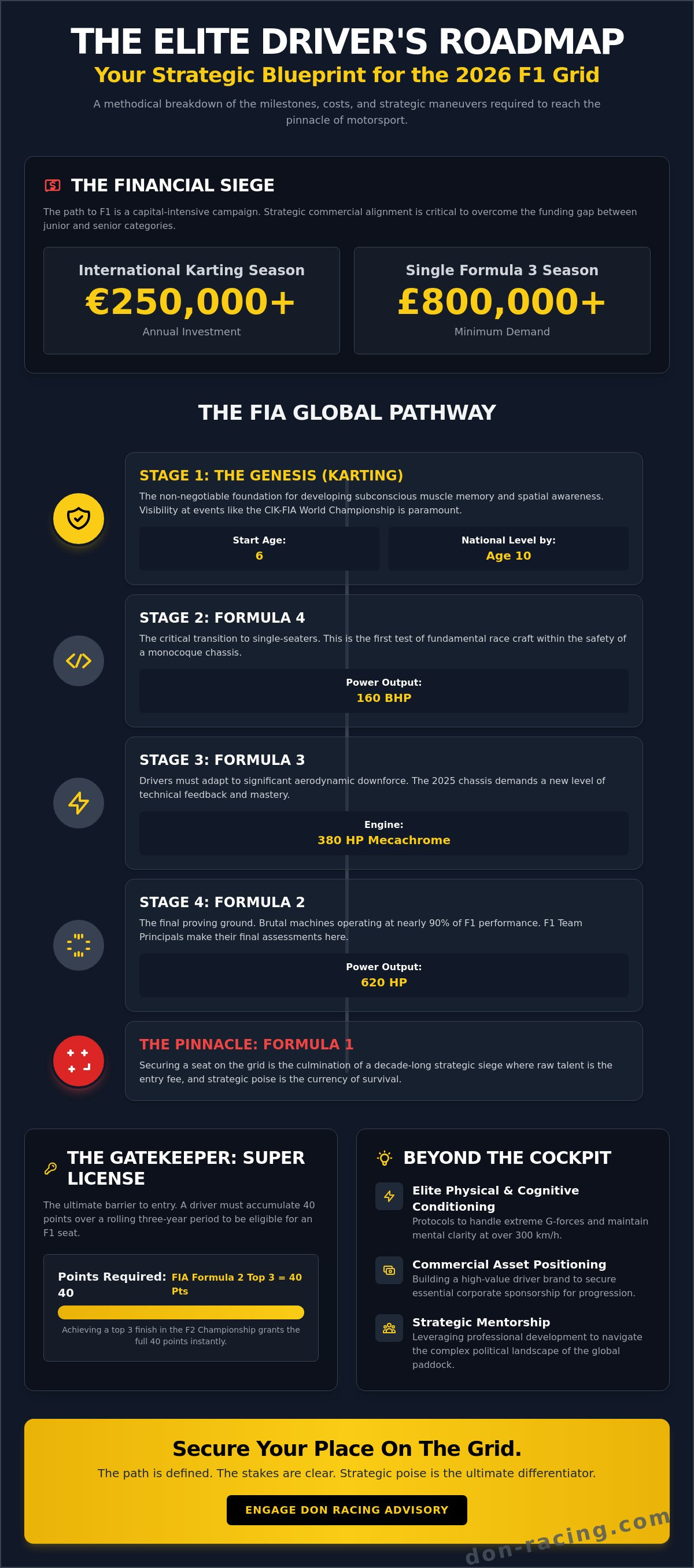
The financial commitment required to sustain this trajectory in 2026 is substantial. A competitive international karting season often demands an annual investment exceeding €250,000. While early stages are typically family-funded, the transition to being sponsor-supported must happen early. This shift is critical to survive the "funding gap," which is the financial chasm that appears between senior karting and the move to Formula 4. Without strategic commercial alignment, even the most gifted drivers find their progression stalled by the sheer weight of operational costs. It's about building a brand as much as it is about hitting an apex.
Navigating the FIA Global Pathway: From F4 to the F1 Grid
The ascent through the Formula 1 driver career path demands more than just a heavy right foot. It requires a calculated mastery of the FIA’s structured hierarchy. This ladder, unified under the "Road to F1" banner, ensures that by the time a pilot reaches the pinnacle, they've been forged in the fires of increasingly complex machinery. Precision is mandatory. Speed alone is no longer enough to satisfy the gatekeepers of the paddock.
Formula 4 serves as the critical transition point. It's the first time a driver leaves the open-air exposure of a kart for the safety of a monocoque chassis. With 160 bhp and mandated safety standards, it's a test of fundamental race craft. The FIA Global Pathway then leads to Formula 3, where drivers must adapt to significant aerodynamic downforce and 380 HP Mecachrome engines. In 2026, the stakes are higher. The F3 2025 chassis demands a level of technical feedback previously reserved for the upper tiers. The final proving ground is Formula 2. Operating at nearly 90% of F1 performance levels, these 620 horsepower machines are brutal. This is where F1 team principals make their final assessments. It's not just about winning; it's about demonstrating the capacity to manage synthetic fuels and complex tyre degradation.
The Super License Points System Explained
The ultimate gatekeeper is the FIA Super License. To be eligible for the 2026 season, a driver must accumulate 40 points over a rolling three-year period. The weightings are deliberate. Finishing in the top three of the FIA Formula 2 Championship grants the full 40 points immediately. Other elite series like IndyCar also offer a direct route, while Formula E and regional championships provide supplementary tallies. For those aiming for the top, strategic driver development is essential to ensure every race weekend contributes to this critical total.
The Importance of Team Selection in Feeder Series
Talent can be obscured by inferior equipment. In the feeder series, alignment with "Prestige Teams" like Prema or ART is often the difference between a stalled career and an F1 contract. These teams offer more than just a fast car. They provide an ecosystem of data engineers and former professionals who understand the paddock's internal politics. For female talent, the F1 Academy now provides a dedicated, subsidized route, ensuring that the path to the top is increasingly meritocratic. Choosing the right environment is as much a financial decision as it is a sporting one.
Beyond the Cockpit: Technical, Physical, and Mental Mastery
Speed is the baseline. Technical mastery is the differentiator. In the modern Formula 1 driver career path, the athlete is no longer just a pilot; they are a high-performance biological component integrated into a multi-million dollar engineering system. To reach the 2026 grid, a driver must exhibit a level of physical and cognitive preparation that mirrors the precision of the machinery they command. The days of relying on raw instinct are over. Today, performance is data-driven, methodical, and relentless.
Physical conditioning remains the most visible barrier to entry. An F1 pilot must withstand sustained loads of up to 5G during cornering and braking. This requires a specialized "Iron Neck" training regimen to prevent the head from becoming a liability under extreme lateral forces. Beyond the neck, cardiovascular efficiency is paramount. A driver’s heart rate often hovers around 170 BPM for two hours, requiring the endurance of a marathon runner combined with the explosive strength of a sprinter. Mental fortitude is equally critical. Making split-second tactical decisions at 300 km/h demands a cognitive load that would paralyze an untrained mind. Neuro-performance training has become standard, focusing on reaction times and peripheral vision under extreme stress.
Elite Simulator Training
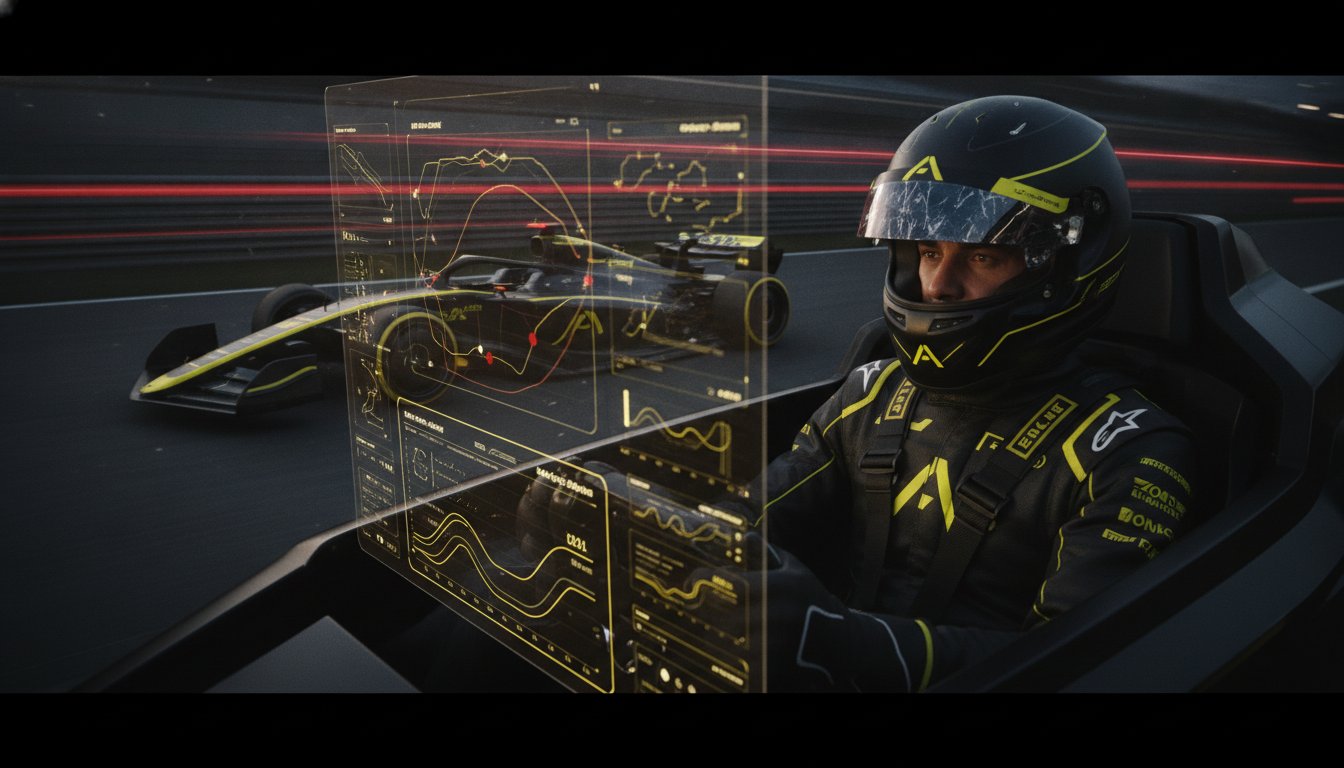
The simulator has evolved from a gaming peripheral into a primary engineering tool. In 2026, professional-grade Racing Simulators are the only way to gain a competitive edge without violating strict FIA testing restrictions. This is where the shift from "gaming" to "engineering" occurs. Elite drivers like Sébastien Buemi and Nyck de Vries utilize these systems not just to learn track layouts, but to correlate data with trackside engineers. They test thousands of setup permutations before a wheel ever touches the tarmac. Integrating a professional simulator into a development program allows a driver to refine their technical feedback loops in a controlled, repeatable environment. It's about building a digital library of experience that translates directly to lap time.
The Performance Team
No driver reaches the pinnacle in isolation. Success requires a bespoke support structure that mirrors the environment of a top-tier F1 team. This performance team includes a dedicated driver coach for tactical analysis, a physiotherapist for recovery, and a mental performance consultant to manage the psychological pressures of the paddock. Data-driven feedback loops, where telemetry is scrutinized after every session, accelerate the learning curve by identifying micro-efficiencies that the human eye cannot see. This infrastructure ensures that the driver remains a high-value asset, ready to deliver results the moment the visor drops.
Securing the Commercial Engine: Sponsorship and Brand Management
The Formula 1 driver career path is fueled by more than just high-octane racing fuel. It is powered by capital. Every seat on the grid carries a precise financial value; a reality that often dictates the longevity of a career as much as lap times. While the public focus remains on the cockpit, the elite practitioner understands that they are the centerpiece of a sophisticated commercial engine. Securing a seat requires the driver to transition from a mere athlete to a high-value corporate asset. Strategic planning within the Formula 1 driver career path must account for these commercial variables from the first day in a single-seater.
Teams are no longer looking for "pay drivers" in the traditional, derogatory sense. They are looking for strategic partners. Modern brand alignment involves a driver becoming a global ambassador who can facilitate massive B2B partnerships. This isn't about placing stickers on a wing. It's about providing a platform for corporate entities to engage in high-stakes networking and global market penetration. A driver who understands this commercial poise becomes indispensable to a team's budget cap strategy. They aren't just driving a car; they're representing a portfolio of global interests.
The ROI of Motorsport Sponsorship
Corporate partners demand measurable returns. Brands leverage partnerships within the F1 and Formula E ecosystems to achieve unparalleled global reach and prestige. The real value often lies away from the television cameras. Exclusive DON Hospitality Packages provide the environment where multi-million dollar contracts are signed, using the thrill of the race as a catalyst for business growth. Visibility metrics are vital, but the ability to offer partners access to an elite, high-performance world is the true currency of the paddock. Strategic alignment with a driver allows a corporation to bypass traditional advertising, placing their brand at the heart of a narrative defined by precision and peak performance.
Managing the Driver Brand
A professional media profile must be established long before reaching the top tier. From the F3 level onwards, a driver’s digital presence is scrutinized by potential sponsors and team principals alike. Professionalism is non-negotiable. Utilizing Professional Video Production & Photography Packages ensures that every victory and technical milestone is captured with the aesthetic of a premier brand. Corporate partners prioritize marketable personalities who can articulate technical concepts with the poise of a seasoned executive. Raw speed is the foundation, but a polished brand is what secures the investment. This meticulous attention to detail signals to a team that the driver is ready for the intense media scrutiny of the global stage.
Elevate your commercial profile and secure the backing needed for the next level by exploring our Sponsorship Packages within F1 and Formula E.
Strategic Mentorship: The DON Racing Driver Development Edge
Speed is merely the baseline for entry. The true differentiator is the ability to navigate the unspoken hierarchies of the global paddock. The Formula 1 driver career path is frequently decided in the quiet corridors of power, far removed from the glare of the grandstands. Without a seasoned guide, even the most technically proficient pilots risk being sidelined by the sport's internal complexities. It's a world where a single misstep in team selection or a poorly timed negotiation can end a decade of preparation. The competition for the twenty available seats is absolute; the margin for error is non-existent.
Our Driver Development Program functions as a strategic shield. It provides the calculated poise required to survive the scrutiny of team principals and corporate stakeholders. By leveraging the frontline experience of former F1 professionals like Sébastien Buemi and Nyck de Vries, DON Racing Advisory delivers a blueprint for elite progression. This isn't just about on-track coaching. It's about transforming a talented prospect into a high-value commercial asset with the maturity to lead a global brand. We prioritize the development of a professional persona that commands respect in both the garage and the boardroom.
Advisory as a Career Accelerator
Top-tier talent requires more than a manager; it requires a strategic partner to oversee every career milestone. Navigating the high-stakes transition from F2 to a full-time F1 seat is the most volatile phase of the Formula 1 driver career path. DON Racing Advisory specializes in this precision management, ensuring that every sporting achievement is backed by a robust commercial case. Our advisory services extend to technical alignment, ensuring the driver’s profile matches the engineering philosophy of target teams. We bridge the gap between technical excellence and corporate viability, positioning our drivers at the forefront of team recruitment lists.
Building a Legacy in Motorsport
Longevity at the top is earned through the consistent maintenance of elite standards. Preparing for the unique demands of Formula 1 and the strategic opportunities within Formula E requires a visionary approach to career longevity. The Exclusive DON Hospitality Package remains central to this goal, fostering an environment where partners feel like active participants in the driver's triumph. By securing these high-level brand placements, we ensure our athletes have the stability to focus on their primary objective: winning. This holistic approach ensures that a driver’s influence extends beyond their time in the cockpit, creating a brand with enduring market value.
Elevate your career or brand with DON Racing Advisory.
Engineering Your Ascent to the 2026 Grid
The journey to the pinnacle of motorsport is a decade-long strategic siege. It begins with the subconscious muscle memory developed in karting and culminates in the high-stakes boardroom negotiations of the paddock. Success on the Formula 1 driver career path requires more than raw speed; it demands a meticulous integration of technical mastery, physical endurance, and commercial poise. We've established that the filter of the FIA Global Pathway is relentless. Only those who balance the technical demands of the F2 chassis with a sophisticated brand profile will secure a seat on the 2026 grid.
Navigating this landscape requires elite advisory. Since 2014, DON Racing Advisory has operated from the heart of Monaco, bridging the gap between potential and performance. Our exclusive partnerships with Sébastien Buemi and Nyck de Vries provide our clients with insider knowledge that is simply inaccessible elsewhere. We transform talented prospects into high-value commercial assets. The grid is waiting for those prepared to take command.
Discover Elite Driver Development & Sponsorship Opportunities with DON Racing Advisory. Your legacy starts at the next apex.
Frequently Asked Questions
How much does it cost to become a Formula 1 driver?
Reaching the pinnacle requires a total investment often exceeding £5 million. A single season in FIA Formula 3 averages £800,000, while Formula 2 campaigns frequently reach £1.5 million. These figures exclude the preceding decade of international karting and Formula 4. Success depends on securing substantial commercial backing early to sustain this capital intensive trajectory. It's a high stakes financial commitment where every lap carries a specific operational cost.
At what age should a child start karting to reach F1?
Six years old is the established benchmark for beginning a competitive karting career. This early start allows for the development of instinctive muscle memory and spatial awareness before transitioning to single seaters at age 15. Most current grid members were competing at a national level by age eight. Delaying entry beyond this window significantly reduces the probability of reaching the elite tiers of the sport. Precision starts early.
What are the FIA Super License requirements for 2026?
Drivers must be 18 years old and accumulate 40 points over the previous three seasons in recognized championships. The 2026 regulations maintain that a top three finish in Formula 2 provides the full 40 point allocation immediately. Applicants must also pass a technical theory test on F1 regulations. The financial requirement includes a base fee of €11,842, plus an additional €2,392 for every championship point scored in the prior season.
Can you get into F1 through sim racing or Esports?
Sim racing serves as a technical bridge rather than a direct entry point. While Esports champions gain visibility, the transition to the physical grid requires proven performance in the FIA feeder series. In 2026, elite prospects use professional Racing Simulators to refine their technical feedback and data literacy. These systems are essential for mastering track layouts and vehicle dynamics before a physical test. It's about engineering readiness.
What is the difference between a pay driver and a professional driver?
The distinction has blurred into a requirement for commercial alignment. A professional driver is viewed as a high value asset who brings both technical excellence and a portfolio of global partners. Modern teams prioritize pilots who can facilitate B2B opportunities and represent premium brands with poise. This strategic alignment ensures the driver is a sustainable investment within the strict constraints of the F1 budget cap. Speed is just the baseline.
How do sponsorship packages work for junior racing drivers?
Junior sponsorship packages have evolved into sophisticated B2B marketing platforms. They offer corporate partners global visibility, exclusive hospitality access, and alignment with peak performance. These agreements are structured to provide measurable ROI through brand integration and elite networking opportunities. Securing these packages is a critical milestone in the Formula 1 driver career path, ensuring the necessary capital for progression through the international feeder series.
How can DON Racing Advisory help aspiring F1 drivers?
DON Racing Advisory provides comprehensive strategic guidance, talent identification, and career management for elite prospects. We leverage our deep industry network to secure crucial sponsorship deals, negotiate advantageous contracts, and place drivers in the most impactful feeder series programs. Our data-driven approach ensures personalized development plans, focusing on both on-track performance and vital off-track commercial acumen. Partnering with DON Racing Advisory offers a clear blueprint for navigating the complex journey to Formula 1.
What role do driver development programs play in reaching the grid?
These programs act as the ultimate gatekeepers and career accelerators. They provide the technical coaching, physical conditioning, and political navigation required to survive the paddock. Participation in an elite development program signals to teams that a driver has been vetted by industry experts. It offers a structured route through the feeder series. This provides the strategic mentorship necessary to manage high stakes contract negotiations and long term brand placement.